When is Close too close
Verity and Dean Cherry had an African dream in 1999 and started Nhongo Safaris® to eliminate the logistical challenges of international visitors on safari. We provide a once in a lifetime experience for wildlife enthusiast that demand quality overnight safaris in South Africa and most particularly the Kruger National Park. We want to enrich our visitors’ experience by providing Luxury Safari Packages or African Safari Holidays and maintain our position as leader in Kruger Park Safaris.
Featured post
Some of Nhongo Safaris Fleet of Open Safari Vehicles
The photo shows some of our fleet of Open Safari Vehicles used while on safari in the Kruger National and Hwange National Parks. These ve...
Showing posts with label open vehicle safaris. Show all posts
Thursday, 4 February 2021
Thursday, 13 June 2019
Lion Photos taken early morning
Good Morning Everybody,
It is always nice to see photos of wildlife, and especially lions, as it is one of the species of African Wildlife that most visiting guests when asked want to see. These photos were taken by one of our guides Amanda while out on an early morning game drive. It is always great to have guides that have good cameras, that can take good photos, but as good as the photo is, it is at the same moment that one must understand that there is a very fine line between guides taking photos and doing the job of guiding clients. Guides have to understand, that when coming into the sighting, their full concentration must be on their clients, and not on their personal job of taking or teying to take the best photos. This is deemed to be totally unprofessional, as your guests and their needs always comes first in every way, even if that means that you as the guide loose the shot of the dat, month or year. a guide never sacrifices their clients for self gain in any shape or form.
I in my days of been a guide, witnessed so many times, guides coming into a sighting, and you see the guide taking photos, before the vehicle has even come to a complete stop. and this goes on for ten minutes, before a word is said to the guests on the vehicle, all this time, the interpretation that should be taking place, is totally non existant, thereby leading to complaints, bad atmosphere on the open safari vehicle with the group or even boredom. Not a pleasant place to be.
A professional guide, always thinks of their guests, and puts everything else second. Always keep it clean, and professional with no room for complaints and guests finding fault.
Below are some phots from the same sighting:
For more info on our safaris, please visit www.nhongosafaris.co.za
Tuesday, 28 May 2019
The importance of happy clients
When in the tourism industry it is the ultimate requirement that one develops a product that is aligned to the visiting guest, and is something that they can not only enjoy, but also learn from, thereby taking home new knowledge gained from their visit to South Africa. Guests under all circumstances have to be told of both the good and the bad things of the country, thereby giving them a balanced view of the country.
A lot of safari operators have always taken a stance regarding the discussion around politics and race relations in the South African context, we at Nhongo Safaris, have always regarded this conversation as important an necessary for firstly people to understand where South Africa has come from, and where the country is currently heading.
We have certainly experienced over the years that the necessity for a well balanced guide, who is firstly very knowledgeable about the bush and wildlife together with environmental interpretation skills, but at the same time, is well up to date with what is going on in the country of South Africa, and the the world, so in order to keep guests concentration and entertained, it is extremely important to have somebody who has a wonderful knowledge of all that is going on.
It takes time to nurture a guide from the time that they start working with you, that you invest the time and content to get them up to a certain level. Once this level has been achieved, what is the tendency to happen, is that the guest or clients, get an overall experience, go home or proceeding further on their holiday with a huge positive outlook on the country, and a client or guest that is happy and does not actually want to leave.
We have been very lucky over the years, to be a balanced safari operator, that have put a lot of time and effort into our staff as a whole, and we continue to reap the benefits of this, as we have received a lot of feedback from our visitors on this subject. Keep up the good work guys, as we are definetly are on the right road.
For more info on our safaris, please visit www.nhongosafaris.co.za
Monday, 27 May 2019
"Lux Magazine" "Global Excellence Award"
For more info on our safaris, please visit www.nhongosafaris.co.za
Sunday, 26 May 2019
2019 TripAdvisor Award
We would just like to take the opportunity to thank our wonderful guides and staff, that have worked really hard to make sure all the guests have a wonderful experience, and are well taken care of.
Without these guys, it would be impossible to get the recognition from "TripAdvisor" that we do.
2019 is a special year, as it is the tenth year that we have got this award, and it has been a long road to get our product offering right, that potential guests and clients feel comfortable booking with us, to experience a wonderful "Kruger National Park safari".
Nhongo Safaris over the years has always lived by one slogan, and that is to "Arrive As a Stranger, But to Leave as A Friend". It is great to see that we have taken over and own the saying that "Our Journeys Change Lives".
For more info on our safaris, please visit www.nhongosafaris.co.za
Tuesday, 21 May 2019
The passing of a great friend
Marc, Dorothy and family, there are no words that can be said at this time, in the passing of your dad and brother "Franscois", there is never the right time for anything like this. We count ourselves so lucky to have had him as a friend. We are certainly going to miss the laughs, the chats, the hard times, the good times, but most of all we will remember the friendship we had.
Your dad loved his elephants, and we have certainly lost a man that was a great elephant in the tourism industry in South Africa. But always remember it is not for ever, as you will see him in heaven one day. Francois my friend, it is not goodbye, but see you in heaven, regards to your mom and dad and Katinka as i am sure they are really enjoying seen you again my friend.
Black and White, a bit of a change

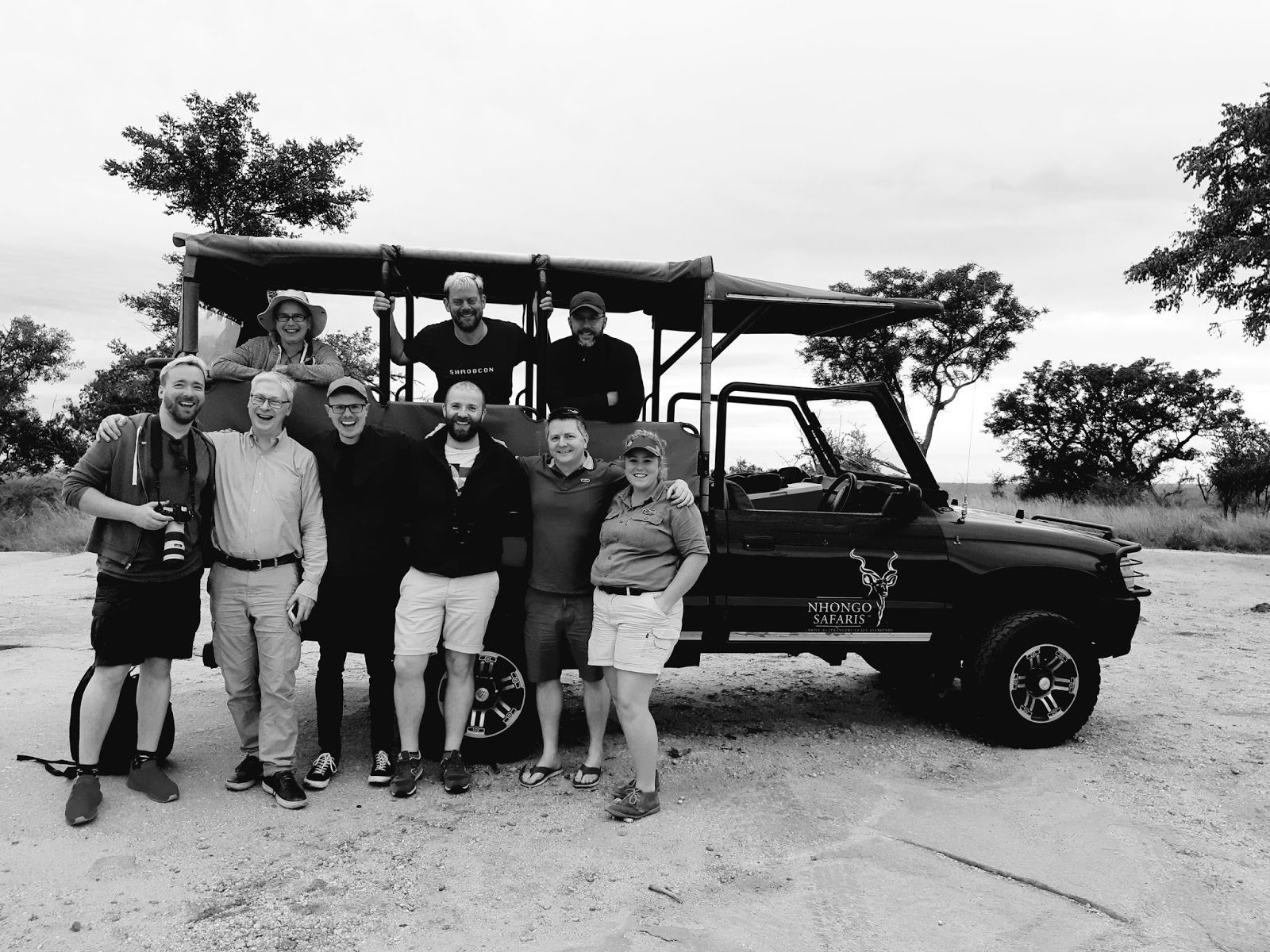
Today we have a bit of a change. Some nice photos taken on Shannon and Kara's last safari with a group from the UK. The girls and guests had a smashing time, with all of the big five been seen, and more. It is the first time, we have tried black and white, and i must say, it makes for a pleasant change.
Just remember to book your safari early, as it gets pretty booked up. Now that South Africa has been named the best safari destination in the world.
Thursday, 7 February 2019
Anti Poaching Helicopters in the Kruger National Park
A really nice video of the SAN Parks Kruger National Parks #Helicopters used for #antipoaching purposes. A realy nice fleet of well made helicopters used in day to day operations in the #rhinowar. If you would like to vist the "Rhino Orhponage", they talk about in the video clip, then please visit our website and go to https://www.nhongosafaris.com/exclusive-5-day-rhino-sanctua… and https://www.nhongosafaris.com/3-day-rhino-quickie-safari, or even if you only want one night added onto any other of our #Krugerpark Packages. #satsa_sa #WeDOTourism #OurJourneysChangeLives #atta_tourism #SATravelTrade #SATravelPeople #KrugerLowveld
Monday, 30 March 2015
On Safari With Karen From 26 - 28 March 2015
26 March 2015
A new safari
started today with a sundowner. This sundowner safari was a rather quiet one,
as the guests saw just zebras in the distance, kudus, hippos in the water and a
scrub hare. However, the sunset was lovely, especially with the Amarula. And
since we had arrived at the park with a rain storm, it was even better that the
sky had cleared up and they got to see a sunset after all.
27 March 2015
Today was a day
with lots of animals. But soon after we started we had our first highlight of
this tour. We drove down Napi road when we saw a buffalo in the distance. From
another car at the sighting we learned that just before we arrived some lions
had crossed and they were still there in between the bushes close to where the
buffalo was. Now we looked again with binoculars and we spotted three lions
walking in front of the buffalo. They were between the bushes so they walked in
and out of sight. However they were walking towards the nearby dam so we
decided to go there and wait for them to arrive.
At Shithave Dam
we sat and waited. And waited. And waited some more. Then we saw the buffalo
arrive but no lions. But we reasoned, the buffalo might have taken a short cut
even though it was following the lions. So we waited some more. And then
suddenly we saw this one lioness on the opposite site of the dam, half hidden
behind a bush, staring at something on our side. At one moment she even hid
completely as not to be seen and sometimes she would crouch as if she wanted to
pounce!
Then suddenly
we see three lionesses crossing the road from behind us towards the dam. So
they walked out of sight of everything to be on the opposite sight of whatever
it was the lioness already had noticed, is looking at. Now they were poised to
build an ambush, and possibly the one still sitting on the opposite side might
be the chaser. In the meantime we had spotted the target as some waterbuck were
standing on the waters edge below us. One big male waterbuck as well as a baby
were in our line of sight and it seemed the lionesses had their eyes on them.
However, while
setting up the ambush one of the lionesses got out of the cover of the grass
and was spotted by the big male waterbuck who sounded the alarm. She hid back
in the grass and crouched slowly towards the waterbucks again but not slow
enough. With the waterbucks now on edge she was at a disadvantage and she took
the leap too early. Her eagerness made the big male bolt long before she got
close. The baby however took a run straight towards the area where we last had
seen the other two females and the one taking the spring got her almost
cornered between herself and some rocks on the waters edge, when the little
waterbuck took a last desperate turn around half through the water and a sprint
in the opposite direction. This took the lioness by surprise. As she was not as
quick in the turn the baby waterbuck got more and more distance and the lioness
gave up. Slowly the other two came out of the high grass too and they had a sip
of water.
Then slowly one
lioness had joined its sister on the opposite side and the walked in between
the bushes trying to be unobtrusive and get close to some other waterbucks. The
lionesses on this side didn't join in or might have played decoy, but it had no
success. The waterbucks had seen the hunt before and even though they didn't
see the lions coming they were so on edge they moved away from the water in a
close knitted group.
That was the
last straw and the girls gave up. One by one they walked to a bunch of rocks
and took a rest. It was our cue to leave the sighting and finally go for a loo
break.
After coffee we
got back on the road and followed a tip from a fellow guide that had seen a
snake attack a chameleon. The snake had retreated when they arrived but the
chameleon might still present an easy meal so we should keep our eyes open. We
found the chameleon down the road and it was obvious he wasn't in the best of
state. While looking at him the snake came back and moved slowly towards the
chameleon again. He surely attacked and bit but got scared off by the arrival
of another car. As this morning had already tested our patience we stayed put
and waited....
And once again
the snake returned and attacked the chameleon. Fervently trying to survive now
the chameleon actually hissed and snapped at the snake and yet again the snake
retreated. This repeated a couple of times when finally the snake had a final
move and grabbed the chameleon in a stronghold and didn't let go. The chameleon
became a well-deserved meal for the snake, who took his prize into the high
grass. It took a while to swallow and as it was difficult to see we continued
our journey and let the snake eat in peace.
Other interesting
sightings: sadle-billed stork, dwarf mongooses, common grey duiker, elephants,
white rhino, warthogs, kudus, woolly necked stork, European roller, impala,
buffalos, lilac-breasted roller, giraffe, hippos in and out of the water,
yellow-billed kite that just caught a mouse, vervet monkeys, a tree squirrel,
helmeted guineafowls, multiple bateleurs flying over, two lappet-faced
vultures, zebras, klipspringers, leopard tortoise, another chameleon, baboons,
blacksmith lapwings divebombing vervet monkeys and a lone wildebeest.
28 March 2015
On our last day
of our safari the skies were crying that the guests had to leave already. It
had been raining all night long and while we had breakfast the clouds were
still not empty. However, it cleared up a little bit when we were ready to
leave and except for a couple of drops at least we stayed dry.
Our first
sighting was a group of 6 wild dogs. As it is the rarest carnivore of the
Kruger, it is always a treat to see some. They were on the move in front of us
when they veered of course into the high grass. Suddenly a spooked duiker came
bolting out of the grass, followed by a wild dog who showed some great athletic
skills by leaping over the road entirely. But the duiker was quicker or good in
hiding as the dog came back out on the road shortly after. We followed them for
about two kilometers when all of them decided to take a shortcut through the
high grass and we lost visual.
To complete the
highlights we were very happy to see a leopard, especially since we had just
missed a sighting of three of them by mere seconds this morning. This lady had most
likely crossed the road behind us out of sight, while we were watching a
giraffe walk away. As we then turned around as we were running out of time, we
stumbled upon a stationary car and suddenly there she was. Out of the high
grass she got a view of her surroundings standing high on a fallen tree. She
jumped down and we followed her down the road where she was in and out of
sight. Then she took one good look at the vehicles which by now all had arrived
at the sighting and decided it was enough. She flicked her tail, turned and
disappeared in the vegetation. Brief but nice as one of my guests was really
eager to see a leopard.
Other
interesting sightings: an elephant bull up close, a family of dwarf mongoose
foraging, warthogs, giraffe, guineafowls, purple crested turaco and a long crested
eagle.
Thanks to Elad
and Sonia for joining us on safari, it was great having you as guests these
couple of days!
Tuesday, 10 February 2015
On Safari With Karen: 7 February 2015
7 February 2015
On our full day game drive we had once again many highlights, but the best one was when we were enjoying the view on top of Mathekanyan. We were suddenly visited by a small troop of baboons that came walking up the hill and started munching on seeds in a little patch of grass in the middle. Apparently they disturbed a scrub hare as it suddenly bolted out of the grass. Well, you might have heard it, but in Kruger: whatever you do, you don't run. Only food runs in Kruger. Guess the scrub hare was to scared to remember and the big male baboon grabbed the opportunity. He chased the scrub hare around the rock and then a swipe, two squeals and a growl and it was over. Astonished about this sighting we watched him tear the scrub hare in pieces and have a lovely meal. Only then we realized we were actually still standing outside the car... But the baboon didn't seem to mind as long as we kept our distance. When the rest of his troop came to investigated he took the pieces and ran away, unwilling to share his surprise winnings.
Prior to this sightings we already had come across lions. Twice to be exact, but the first sighting was one of the best. At Transport Dam three young males were hanging out in the shade. As the shade of the next bush was better they got up one by one and moved. But then this big bull elephant comes striding over the dam wall to have a cool drink of water. The lions got up and scamper while the elephant drinks its fill. When he has had enough he walks off, the three lions actually return and have a drink of water themselves. And then went back to the shady spot to have a lie down again as if nothing happened.
Other interesting sightings were numerous: a third lion sighting, elephant herds crossing, a dung beetle rolling a dung ball, lilac-breasted and European roller, nyalas, woodlands kingfishers, yellow-billed kite, impalas, impressive kudu bulls, Speke's hinged tortoise as well as leopard tortoise, water monitor, giraffes, a tree full of carmine bee eaters, more baboons (now known as bunny killers), warthogs, vervet monkeys, crocodile, spider-hunting wasp, dwarf mongoose, bateleur, white-backed and hooded vultures, hippopotamus, and plenty of additional birds.
On our full day game drive we had once again many highlights, but the best one was when we were enjoying the view on top of Mathekanyan. We were suddenly visited by a small troop of baboons that came walking up the hill and started munching on seeds in a little patch of grass in the middle. Apparently they disturbed a scrub hare as it suddenly bolted out of the grass. Well, you might have heard it, but in Kruger: whatever you do, you don't run. Only food runs in Kruger. Guess the scrub hare was to scared to remember and the big male baboon grabbed the opportunity. He chased the scrub hare around the rock and then a swipe, two squeals and a growl and it was over. Astonished about this sighting we watched him tear the scrub hare in pieces and have a lovely meal. Only then we realized we were actually still standing outside the car... But the baboon didn't seem to mind as long as we kept our distance. When the rest of his troop came to investigated he took the pieces and ran away, unwilling to share his surprise winnings.
Prior to this sightings we already had come across lions. Twice to be exact, but the first sighting was one of the best. At Transport Dam three young males were hanging out in the shade. As the shade of the next bush was better they got up one by one and moved. But then this big bull elephant comes striding over the dam wall to have a cool drink of water. The lions got up and scamper while the elephant drinks its fill. When he has had enough he walks off, the three lions actually return and have a drink of water themselves. And then went back to the shady spot to have a lie down again as if nothing happened.
Other interesting sightings were numerous: a third lion sighting, elephant herds crossing, a dung beetle rolling a dung ball, lilac-breasted and European roller, nyalas, woodlands kingfishers, yellow-billed kite, impalas, impressive kudu bulls, Speke's hinged tortoise as well as leopard tortoise, water monitor, giraffes, a tree full of carmine bee eaters, more baboons (now known as bunny killers), warthogs, vervet monkeys, crocodile, spider-hunting wasp, dwarf mongoose, bateleur, white-backed and hooded vultures, hippopotamus, and plenty of additional birds.
Tuesday, 13 May 2014
Videos Uploded
New videos from the Kruger National Park have been uploaded to our Facebook page, Follow the link to like us and view the videos https://www.facebook.com/nhongosafaris
Thursday, 20 March 2014
On Safari With Karen From 18 March 2014
18 March 2014
After picking up the guests at the airport we drove to the
Kruger Park through all the plantations. We decided to first check in at
Nkambeni and got our first animal sighting on the way to the camp: a herd of
impalas. After a quick look around at Nkambeni we went straight on safari. On
camp road we encountered those same impalas.
We went up the tar road spotting some nice birds like white fronted bee eaters and fighting fork tail drongos. We saw two white rhinoceros grazing, paying little notice of us watching them. A little further on was where all the action was. We saw a warthog close to the road and a mixed herd of impala and kudu. When we drove closer we noticed that four of the kudus were intently watching and listening in the same direction. We took our binos and stared into the same direction not seeing anything. But when we were about to continue one of the impalas barked an alarm call and all of them moved back and closer together and then started to watch intently again. Almost certain there must be something there, we reversed to higher ground and scouted in the direction it must be. The warthog didn't pay much attention and kept on munching and walking into that direction. We were watching the warthog when suddenly a shape walked onto an open spot having a quick overall look, spooking the kudus and then turning into a crouch and it went behind the bush. It was there, we all saw it. But trying to find it back in the high grass in between the bushes, that turned out to be impossible. We stared and stared and waited for about 30min. Nothing. Even the impalas and kudus started to relax again. So finally we decided to continue...
On the loop we also spotted a family of dwarf mongoose playing out in the street and 2 buffalo relaxing. We drove around a loop near Pretoriuskop without seeing anything but a lonely impala. Then we decided to have a quick look again there where the action was, but no luck. The impalas, kudus and warthog as well as their stalker all gone. We did see the two white rhinos again though and they were much more visible this time around.
We then returned to Nkambeni as it was nearing closing time. On camp road we spotted a brilliant kudu bull, 3 more buffalo in the high grass and we got stuck behind a herd of impala. They had not a care in the world that we actually wanted to pass and they walked in front of us for almost a kilometre! Then one by one they finally went off the road and we enter the camp just in time for closing. It was a good start!
We went up the tar road spotting some nice birds like white fronted bee eaters and fighting fork tail drongos. We saw two white rhinoceros grazing, paying little notice of us watching them. A little further on was where all the action was. We saw a warthog close to the road and a mixed herd of impala and kudu. When we drove closer we noticed that four of the kudus were intently watching and listening in the same direction. We took our binos and stared into the same direction not seeing anything. But when we were about to continue one of the impalas barked an alarm call and all of them moved back and closer together and then started to watch intently again. Almost certain there must be something there, we reversed to higher ground and scouted in the direction it must be. The warthog didn't pay much attention and kept on munching and walking into that direction. We were watching the warthog when suddenly a shape walked onto an open spot having a quick overall look, spooking the kudus and then turning into a crouch and it went behind the bush. It was there, we all saw it. But trying to find it back in the high grass in between the bushes, that turned out to be impossible. We stared and stared and waited for about 30min. Nothing. Even the impalas and kudus started to relax again. So finally we decided to continue...
On the loop we also spotted a family of dwarf mongoose playing out in the street and 2 buffalo relaxing. We drove around a loop near Pretoriuskop without seeing anything but a lonely impala. Then we decided to have a quick look again there where the action was, but no luck. The impalas, kudus and warthog as well as their stalker all gone. We did see the two white rhinos again though and they were much more visible this time around.
We then returned to Nkambeni as it was nearing closing time. On camp road we spotted a brilliant kudu bull, 3 more buffalo in the high grass and we got stuck behind a herd of impala. They had not a care in the world that we actually wanted to pass and they walked in front of us for almost a kilometre! Then one by one they finally went off the road and we enter the camp just in time for closing. It was a good start!
19 March 2014
This morning Alex and Kelly went on the bushwalk, which was
a great success. Apart from all kinds of tracks, a sable skull, various
interesting spiders and the not so welcome ticks, they were also lucky enough
to come across a large herd of buffalo, white rhino and impalas.
While they were walking around the bush, I took Will and Melanie, who had been doing their safari with Curtis, out for a short drive before having to go to Nelspruit for their transfer. It was really misty and a bit cold when we left just before 6am. Just outside the gate we spotted a herd of impalas and a little further on a common grey duiker. When we got to the tar road after a couple of kilometres we saw a buffalo grazing right next to the road.
We then turned onto Napi and spotted a herd of zebra with two youngsters close to Shitlhave Dam. We drove Napi until the Boulders where we had to turn around as we were running out of time. The mist had cleared a bit so we could see a bit more of the bush but it stayed rather quiet unfortunately. On the last stretch we managed to see a slender mongoose and just before the gate some dwarf mongoose as well. But then it was time to say goodbye to the Kruger Park and hit the road. I hope even though it was a slow morning Melanie and Will had a great safari with us!
Before the sundowner was happening for Kelly and Alex this afternoon, we decided to go on a little bumble around the park to see if we could find some more animals. On camp road we drove into the middle of quite a large troop if baboons, which were shy and disappeared in the thick bush when they spotted the car. Also we spotted the ever present impalas.
On the tar road we saw kudus. We went down the dirt road towards Fayi Loop, taking a loop around Pretoriuskop. We spotted vervet monkeys lazying around in a tree just after the turn off and a waterbuck well hidden in the bush. Then on the way back to the tar road we spotted an elephant that most likely just had crossed the road. We watched him feeding for a while before we continued. We then came across a family of dwarf mongoose on the side of the road. Some were adventures and stared back at us and one even came close to the car to investigate.
Back on Napi we drove towards Shitlhave Dam. We had found fresh buffalo tracks back where we came from leading out of the loop, and after about a 100m on the tar we spotter three dagga boys together near the stream. While watching the buffalos with the red-billed oxpeckers hanging at the ears, we saw a leopard tortoise cross the road up ahead.
At Shitlhave Dam it was quiet, even the crocodile that was lying on the little sandy beach that is left after the high water level didn't move an inch.
We returned towards Numbi gate for the start of the sundowner. On the way seeing more kudus, the same buffalos, pretty European rollers, white fronted bee eater so close it almost flew into the car, one of the last woodlands kingfishers, Cape glossy starlings.
While they were walking around the bush, I took Will and Melanie, who had been doing their safari with Curtis, out for a short drive before having to go to Nelspruit for their transfer. It was really misty and a bit cold when we left just before 6am. Just outside the gate we spotted a herd of impalas and a little further on a common grey duiker. When we got to the tar road after a couple of kilometres we saw a buffalo grazing right next to the road.
We then turned onto Napi and spotted a herd of zebra with two youngsters close to Shitlhave Dam. We drove Napi until the Boulders where we had to turn around as we were running out of time. The mist had cleared a bit so we could see a bit more of the bush but it stayed rather quiet unfortunately. On the last stretch we managed to see a slender mongoose and just before the gate some dwarf mongoose as well. But then it was time to say goodbye to the Kruger Park and hit the road. I hope even though it was a slow morning Melanie and Will had a great safari with us!
Before the sundowner was happening for Kelly and Alex this afternoon, we decided to go on a little bumble around the park to see if we could find some more animals. On camp road we drove into the middle of quite a large troop if baboons, which were shy and disappeared in the thick bush when they spotted the car. Also we spotted the ever present impalas.
On the tar road we saw kudus. We went down the dirt road towards Fayi Loop, taking a loop around Pretoriuskop. We spotted vervet monkeys lazying around in a tree just after the turn off and a waterbuck well hidden in the bush. Then on the way back to the tar road we spotted an elephant that most likely just had crossed the road. We watched him feeding for a while before we continued. We then came across a family of dwarf mongoose on the side of the road. Some were adventures and stared back at us and one even came close to the car to investigate.
Back on Napi we drove towards Shitlhave Dam. We had found fresh buffalo tracks back where we came from leading out of the loop, and after about a 100m on the tar we spotter three dagga boys together near the stream. While watching the buffalos with the red-billed oxpeckers hanging at the ears, we saw a leopard tortoise cross the road up ahead.
At Shitlhave Dam it was quiet, even the crocodile that was lying on the little sandy beach that is left after the high water level didn't move an inch.
We returned towards Numbi gate for the start of the sundowner. On the way seeing more kudus, the same buffalos, pretty European rollers, white fronted bee eater so close it almost flew into the car, one of the last woodlands kingfishers, Cape glossy starlings.
Wednesday, 15 January 2014
Support Lasher Tools In The Fight Against Rhino Poaching
Now gardening, farming and construction can make a difference in conserving our environment and stopping poaching.
For each unit of their Big 5 tools sold, Lasher Tools will donate... funds to support the counter poaching activities of the SANParks Honorary Rangers in our National Parks.
Help protect our endangered species so that our children and their children can enjoy their natural heritage.
Buy any of these Lasher products at any hardware store, garden centre or shop.
Lasher Tools, a proud South African company supporting our National Parks.
For more information: http://sanparksvolunteers.org/
For each unit of their Big 5 tools sold, Lasher Tools will donate... funds to support the counter poaching activities of the SANParks Honorary Rangers in our National Parks.
Help protect our endangered species so that our children and their children can enjoy their natural heritage.
Buy any of these Lasher products at any hardware store, garden centre or shop.
Lasher Tools, a proud South African company supporting our National Parks.
For more information: http://sanparksvolunteers.org/
Monday, 9 December 2013
Contact Made With Poachers
On Saturday, 7th December 2013, rangers in the Stolsnek section of the Kruger National Park made contact with a group of three suspected rhino poachers on their way out of the park.
During the incident, two suspects were fatally wounded and the third suspect managed to escape arrest.
A hunting rifle, ammunition and poaching equipment were recovered during the operation.
No evidence was found of the group having shot any rhino in the Kruger National Park.
Issued by:
South African National Parks
During the incident, two suspects were fatally wounded and the third suspect managed to escape arrest.
A hunting rifle, ammunition and poaching equipment were recovered during the operation.
No evidence was found of the group having shot any rhino in the Kruger National Park.
Issued by:
South African National Parks
Friday, 20 September 2013
Department of Environmental Affairs, SANParks and Stakeholders To Host Rhino Street Parade
Department of Environmental Affairs, SANParks and Stakeholders to host rhino street parade to mark World Rhino Day
The Minister of Water and Environmental Affairs, Mrs Edna Molewa, will lead a Rhino Day Parade to mark World Rhino Day in Pretoria on 21 September 2013. World Rhino Day is observed annually on 22 September.
The Street Parade, aimed at showing support from the youth of South Africa to the scourge of rhino poaching, involves a march by an estimated 1 500 children and adults from Church Square to the National Zoological Gardens in Pretoria. The event is also aimed at raising awareness around the serious issue of rhino poaching.
A formal programme will take place at the National Zoological Gardens. During the event, school children will sign a pledge to show support for the work being done by government in the war against rhino poaching.
The 2013 Rhino Day event is being hosted by the Department of Environmental Affairs, SANParks, the National Zoological Gardens of SA, the City of Tshwane, SA National Biodiversity Institute, Unite Against Poaching and the Walter Sisulu Environmental Centre, Mamelodi.
The details of the event are as follows:
Date: Saturday, 21 September 2013
Venue: Street Parade: Start at Church Square, Pretoria CBD
Time: 09:30
RSVP:
Raymond Ramaru
Tel: 012 310 3990
Email: rramaru@environment.gov.za
Eleanor Momberg
Tel: 012 395 1884
Cell: 083 400 5741
Email: emomberg@environment.gov.za
Issued by:
Department of Environmental Affairs
The Minister of Water and Environmental Affairs, Mrs Edna Molewa, will lead a Rhino Day Parade to mark World Rhino Day in Pretoria on 21 September 2013. World Rhino Day is observed annually on 22 September.
The Street Parade, aimed at showing support from the youth of South Africa to the scourge of rhino poaching, involves a march by an estimated 1 500 children and adults from Church Square to the National Zoological Gardens in Pretoria. The event is also aimed at raising awareness around the serious issue of rhino poaching.
A formal programme will take place at the National Zoological Gardens. During the event, school children will sign a pledge to show support for the work being done by government in the war against rhino poaching.
The 2013 Rhino Day event is being hosted by the Department of Environmental Affairs, SANParks, the National Zoological Gardens of SA, the City of Tshwane, SA National Biodiversity Institute, Unite Against Poaching and the Walter Sisulu Environmental Centre, Mamelodi.
The details of the event are as follows:
Date: Saturday, 21 September 2013
Venue: Street Parade: Start at Church Square, Pretoria CBD
Time: 09:30
RSVP:
Raymond Ramaru
Tel: 012 310 3990
Email: rramaru@environment.gov.za
Eleanor Momberg
Tel: 012 395 1884
Cell: 083 400 5741
Email: emomberg@environment.gov.za
Issued by:
Department of Environmental Affairs
Monday, 16 September 2013
Rhino Projects And Fundraising Required To Register With Department of Environmental Affairs
Non-Profit Organisations, Non-Governmental Organisations and individuals involved in Rhino Projects and Fundraising required to register with Department of Environmental Affairs
The Department of Environmental Affairs is inviting all Non-Profit Organisations (NPOs), Non-Government Organisations (NGOs), businesses and individuals involved in fighting rhino poaching to register with the Department by 30 September 2013.
The initiative is one of numerous steps being taken to rid the sector of illegitimate and ill-intended operations and ensure greater legitimacy of organisations and individuals involved in projects aimed at addressing the scourge of rhino poaching in South Africa.
In light of the serious concern by government and members of the public about the increase in rhino poaching, a common goal is being shared by the South African government, private rhino owners, non-profit organisations, non-governmental organisations, stakeholders and the public at large – to reduce the illegal killing of rhino and secure and grow rhino populations.
As a result, a number of private individuals and organisations have decided to get involved in the fight against rhino poaching. This has included raising public awareness; the collection of funds to fight the scourge of poaching within national, provincial and private game reserves in South Africa; and the development and implementation of projects relating to rhino conservation and safety and security.
Under the present system, NGOs and NPOs are required to register with government through the Department of Social Development. The failure of organisations or individuals to submit annual audited reports results in the de-registration of such bodies from the Social Development database, but some continue operating despite deregistration. The Department and rhino industry stakeholders have also expressed concern about the increase in illegitimate operations.
The registration of NPOs, NGOs, organisations and/or individuals involved in rhino anti-poaching projects with the Department of Environmental Affairs will improve monitoring of compliance with the Companies and Intellectual Property Commission (CIPC) and ensure that their financial records are up-to-date.
The total number of rhinos poached in South Africa since January 2013 has increased to 635, while number of people arrested for rhino poaching-related offences has climbed to 194.
The Kruger National Park continues to bear the brunt of rhino poaching in South Africa with 396 rhinos killed for their horns so far this year. Of the total number of rhinos poached, 64 rhinos have been killed in Limpopo, 63 in KwaZulu-Natal, 62 in North West and 43 in Mpumalanga.
The establishment of the national database, and for a credible national financing mechanism for rhino anti-poaching, were agreed to by government and rhino stakeholders during a public engagement on 12 July 2013. During the stakeholder engagement, the Department of Environmental Affairs was informed by more than 20 NGOs and NPOs about the work that they do to fight the scourge of rhino poaching. Numerous industry role players raised concerns about the legitimacy of organisations involved in fighting rhino poaching, and some of the projects initiated, particularly fundraising.
The aim of the registration process is to:
- rid the industry of illegitimate operations and ensure that funding for rhino interventions are channelled to the relevant, identified projects;
- establish a register of rhino projects, including but not limited to fundraising, anti-poaching, safety and security, support and conservation initiatives;
- identify gaps that exist between the work of government, NGOs, NPOs and individuals;
- identify priority areas that requires additional assistance;
- identify opportunities to collaborate, cooperate or consolidate projects / initiatives or parts thereof;
- confirm the registration of rhino-related NPOs with the Department of Social Development and obtain information relating to the registration and reporting requirements; and
- develop criteria to assist in determining whether NPOs, NGOs or individuals involved in rhino related activities are contributing towards the fight against rhino poaching and the conservation of the species.
In an effort to coordinate the financing of anti-poaching initiatives, the Department is planning to establish a National Rhino Fund in consultation with the National Treasury. The Fund will address all interventions directed to rhino poaching.
The establishment of the National Rhino Fund, and the compilation of a database of all NGOs, NPOs and any other organizations and/ or individuals who raise funds to save the rhino are among the recommendations being implemented following the adoption of the Rhino Issue Management report by Cabinet earlier this year.
The Department is also reviewing the National Strategy for the Safety and Security of Rhinoceros Populations in South Africa (NSSSRPSA), adopted in 2010, to ensure it addresses all new concerns and efforts to ensure rhino poaching is dealt with in a coordinated and effective manner.
The National Rhino Fund will result in the consolidation of all funding requirements and ensure that funding is distributed successfully to state- and privately-owned rhino anti-poaching initiatives, including conservation, safety and security, skills development and research.
The increase in government funding to save the rhino demonstrates the Department’s commitment to the National Rhino Fund to which business, international funders, local NGOs and individuals will be able to contribute.
The autonomous nature of the National Rhino Fund will ensure that identified legitimate funding requirements will be immediately met, and not be caught up in red tape.
All NPOs, NGOs, organisations and individuals involved in raising awareness or funding to address rhino poaching are requested to email the name of the organisation, contact details and details relating to the project / initiative / intervention to Ms Olga Kumalo through e-mail: okumalo@environment.gov.za
South Africans are encouraged to report incidents of poaching and tip-offs to the anonymous tip-off lines 0800 205 005, 08600 10111 or Crime-Line on 32211.
Issued by:
Department of Environmental Affairs
The Department of Environmental Affairs is inviting all Non-Profit Organisations (NPOs), Non-Government Organisations (NGOs), businesses and individuals involved in fighting rhino poaching to register with the Department by 30 September 2013.
The initiative is one of numerous steps being taken to rid the sector of illegitimate and ill-intended operations and ensure greater legitimacy of organisations and individuals involved in projects aimed at addressing the scourge of rhino poaching in South Africa.
In light of the serious concern by government and members of the public about the increase in rhino poaching, a common goal is being shared by the South African government, private rhino owners, non-profit organisations, non-governmental organisations, stakeholders and the public at large – to reduce the illegal killing of rhino and secure and grow rhino populations.
As a result, a number of private individuals and organisations have decided to get involved in the fight against rhino poaching. This has included raising public awareness; the collection of funds to fight the scourge of poaching within national, provincial and private game reserves in South Africa; and the development and implementation of projects relating to rhino conservation and safety and security.
Under the present system, NGOs and NPOs are required to register with government through the Department of Social Development. The failure of organisations or individuals to submit annual audited reports results in the de-registration of such bodies from the Social Development database, but some continue operating despite deregistration. The Department and rhino industry stakeholders have also expressed concern about the increase in illegitimate operations.
The registration of NPOs, NGOs, organisations and/or individuals involved in rhino anti-poaching projects with the Department of Environmental Affairs will improve monitoring of compliance with the Companies and Intellectual Property Commission (CIPC) and ensure that their financial records are up-to-date.
The total number of rhinos poached in South Africa since January 2013 has increased to 635, while number of people arrested for rhino poaching-related offences has climbed to 194.
The Kruger National Park continues to bear the brunt of rhino poaching in South Africa with 396 rhinos killed for their horns so far this year. Of the total number of rhinos poached, 64 rhinos have been killed in Limpopo, 63 in KwaZulu-Natal, 62 in North West and 43 in Mpumalanga.
The establishment of the national database, and for a credible national financing mechanism for rhino anti-poaching, were agreed to by government and rhino stakeholders during a public engagement on 12 July 2013. During the stakeholder engagement, the Department of Environmental Affairs was informed by more than 20 NGOs and NPOs about the work that they do to fight the scourge of rhino poaching. Numerous industry role players raised concerns about the legitimacy of organisations involved in fighting rhino poaching, and some of the projects initiated, particularly fundraising.
The aim of the registration process is to:
- rid the industry of illegitimate operations and ensure that funding for rhino interventions are channelled to the relevant, identified projects;
- establish a register of rhino projects, including but not limited to fundraising, anti-poaching, safety and security, support and conservation initiatives;
- identify gaps that exist between the work of government, NGOs, NPOs and individuals;
- identify priority areas that requires additional assistance;
- identify opportunities to collaborate, cooperate or consolidate projects / initiatives or parts thereof;
- confirm the registration of rhino-related NPOs with the Department of Social Development and obtain information relating to the registration and reporting requirements; and
- develop criteria to assist in determining whether NPOs, NGOs or individuals involved in rhino related activities are contributing towards the fight against rhino poaching and the conservation of the species.
In an effort to coordinate the financing of anti-poaching initiatives, the Department is planning to establish a National Rhino Fund in consultation with the National Treasury. The Fund will address all interventions directed to rhino poaching.
The establishment of the National Rhino Fund, and the compilation of a database of all NGOs, NPOs and any other organizations and/ or individuals who raise funds to save the rhino are among the recommendations being implemented following the adoption of the Rhino Issue Management report by Cabinet earlier this year.
The Department is also reviewing the National Strategy for the Safety and Security of Rhinoceros Populations in South Africa (NSSSRPSA), adopted in 2010, to ensure it addresses all new concerns and efforts to ensure rhino poaching is dealt with in a coordinated and effective manner.
The National Rhino Fund will result in the consolidation of all funding requirements and ensure that funding is distributed successfully to state- and privately-owned rhino anti-poaching initiatives, including conservation, safety and security, skills development and research.
The increase in government funding to save the rhino demonstrates the Department’s commitment to the National Rhino Fund to which business, international funders, local NGOs and individuals will be able to contribute.
The autonomous nature of the National Rhino Fund will ensure that identified legitimate funding requirements will be immediately met, and not be caught up in red tape.
All NPOs, NGOs, organisations and individuals involved in raising awareness or funding to address rhino poaching are requested to email the name of the organisation, contact details and details relating to the project / initiative / intervention to Ms Olga Kumalo through e-mail: okumalo@environment.gov.za
South Africans are encouraged to report incidents of poaching and tip-offs to the anonymous tip-off lines 0800 205 005, 08600 10111 or Crime-Line on 32211.
Issued by:
Department of Environmental Affairs

Friday, 13 September 2013
Kruger National Park Raises Rhino Awareness With Vietnam
The Kruger National Park is, for the first time, hosting a delegation of environmental authorities from Vietnam in a bid to raise awareness about rhino poaching and its effects in Southern Africa.
The Vietnamese officials revealed rhino horn continues to gain popularity in their country and the penalties for poaching and smuggling are far less stringent.
The deputy chief of Vietnam’s environmental police said only five people were arrested in Vietnam for smuggling wildlife this year.
If found guilty, the accused can face a jail sentence of between five and seven years.
Vietnam’s National Assembly member said there’s still a big perception amongst his country’s general population that rhino horns have medicinal benefits, adding that dispelling the myth is one of their biggest challenges.
At present 100 grams of rhino horn costs about R50,000 in Vietnam.
This has made the rare commodity a symbol of status amongst the country’s affluent class.
Vietnam’s deputy police chief has also revealed that a person was caught at the Ná»™i BÃ i International Airport in Hanoi with six horns that weighed approximately 16 kilograms.
He said this was one of the nation’s biggest busts.
By:
Eyewitness News
The Vietnamese officials revealed rhino horn continues to gain popularity in their country and the penalties for poaching and smuggling are far less stringent.
The deputy chief of Vietnam’s environmental police said only five people were arrested in Vietnam for smuggling wildlife this year.
If found guilty, the accused can face a jail sentence of between five and seven years.
Vietnam’s National Assembly member said there’s still a big perception amongst his country’s general population that rhino horns have medicinal benefits, adding that dispelling the myth is one of their biggest challenges.
At present 100 grams of rhino horn costs about R50,000 in Vietnam.
This has made the rare commodity a symbol of status amongst the country’s affluent class.
Vietnam’s deputy police chief has also revealed that a person was caught at the Ná»™i BÃ i International Airport in Hanoi with six horns that weighed approximately 16 kilograms.
He said this was one of the nation’s biggest busts.
By:
Eyewitness News
Tuesday, 3 September 2013
Kruger National Park To Apply The High Intensity Prescribed Burn
The Kruger National Park (KNP) Scientists and Rangers in conjunction with Working on Fire teams will apply the high intensity prescribed burn in the southern part of the Park on 2 - 3 September 2013. The teams will start with what is called a multiple spiral ignition on the 2nd of September at 15:30 and then perimeter ignition on the 3rd of September, also in the afternoon. Some parts of the gravel roads will temporarily be closed during the burn; in order to completely allow the ignition to end.
“The aim of this fire treatment is to determine the desirability and feasibility of researching with high intensity burns to address bush thickening at selected areas in the KNP. The data analysis indicated that we have the most suitable weather conditions to conduct the treatment around this period in September,” indicated the GM: Communications and Marketing - KNP, William Mabasa.
Gravel roads to be closed will be: S112 and S118 on 2 September; and parts of S23, S113, S114 and H3 which will affect routes towards the Jock of the Bushveld, Afsaal Picnic Spot, Gardenia bird hide, Lukimbi Private Lodge and Biyamiti Bush Camp) on 3 September 2013.
“The areas around the target sites will be cleared to ensure animals are safe and ground teams to guide tourists on alternative roads will also be available at the affected roads”, concluded Mabasa.
This is a follow-up on a high intensity burn which took place in 2010. In preparation for this year’s treatment, prior vegetation surveys were conducted such as sampling the vegetation before and after the fire treatment, collecting of data a year after the burn to look at re-growth responses, plot work – recording of all woody vegetation, information such as species, height, diameter and number of stems etc; assisting in giving an indication of the amount of fuel that is available to burn.
Issued by:
South African National Parks Kruger National Park Communications
“The aim of this fire treatment is to determine the desirability and feasibility of researching with high intensity burns to address bush thickening at selected areas in the KNP. The data analysis indicated that we have the most suitable weather conditions to conduct the treatment around this period in September,” indicated the GM: Communications and Marketing - KNP, William Mabasa.
Gravel roads to be closed will be: S112 and S118 on 2 September; and parts of S23, S113, S114 and H3 which will affect routes towards the Jock of the Bushveld, Afsaal Picnic Spot, Gardenia bird hide, Lukimbi Private Lodge and Biyamiti Bush Camp) on 3 September 2013.
“The areas around the target sites will be cleared to ensure animals are safe and ground teams to guide tourists on alternative roads will also be available at the affected roads”, concluded Mabasa.
This is a follow-up on a high intensity burn which took place in 2010. In preparation for this year’s treatment, prior vegetation surveys were conducted such as sampling the vegetation before and after the fire treatment, collecting of data a year after the burn to look at re-growth responses, plot work – recording of all woody vegetation, information such as species, height, diameter and number of stems etc; assisting in giving an indication of the amount of fuel that is available to burn.
Issued by:
South African National Parks Kruger National Park Communications
Monday, 26 August 2013
Poaching Update 25/8
Another success has been made by our rangers in the Tshokwane section who made contact with a group of poachers after tracking them. During the incident, a suspect was arrested. A rifle, silencer, ammo and a set of horns were recovered. Two suspects managed to escape. Our Mozambique colleagues also had another success when they made contact with a poaching group outbound from KNP. Two suspects were arrested and 1 managed to escape.
Friday, 23 August 2013
Subscribe to:
Posts (Atom)